Basically, damaged drywall makes your home look absolutely abandoned, no matter if it is a tiny nail hole or a huge dent or water damage. The good thing is that drywall repair is one of the easiest home improvement tasks you can do. With the right tools and working methods, you can make your walls look as if they were new again.
Here is an article that will guide you through all that you need to know about drywall repair, from minor repairs to major damage restoration.
Common Types of Drywall Damage:
Drywall issues can be of various types. Getting to the root of the problem will help guide you to the appropriate repair.
1. Small Holes
Giving rise to small holes are basically nails, screws, or wall anchors. These types of damage can be easily and quickly repaired.
2. Medium Holes
Medium holes come from situations like where a door knob hits the wall or any such accidental impact situations.
3. Large Holes
Large holes can be created when a plumbing or an electrical repair work is done or could also be the result of a violent impact.
4. Cracks
Cracks are usually the result of house settling or a change in temperature.
5. Water Damage
If flooding or leaking occurs, drywalls become weak and there will be staining, bubbling, or mold growth.
Tools and Materials You’ll Need
Before you start fixing drywall, gather the following necessities:
- Joint compound (spackle or mud)
- Various sizes of putty knife
- Sandpaper or sanding sponge
- Drywall patch or mesh tape
- Utility knifePrimer and paint
- Drywall screws (for bigger fixes)
How to Repair Small Holes
Small holes are minor repairs that a large majority of homeowners can finish in just a few minutes.
- Clean the hole and take out any loose debris
- Apply spackle with a putty knife
- Smooth the surfaceAllow it to dry completely
- Sand lightlyPrime and paint
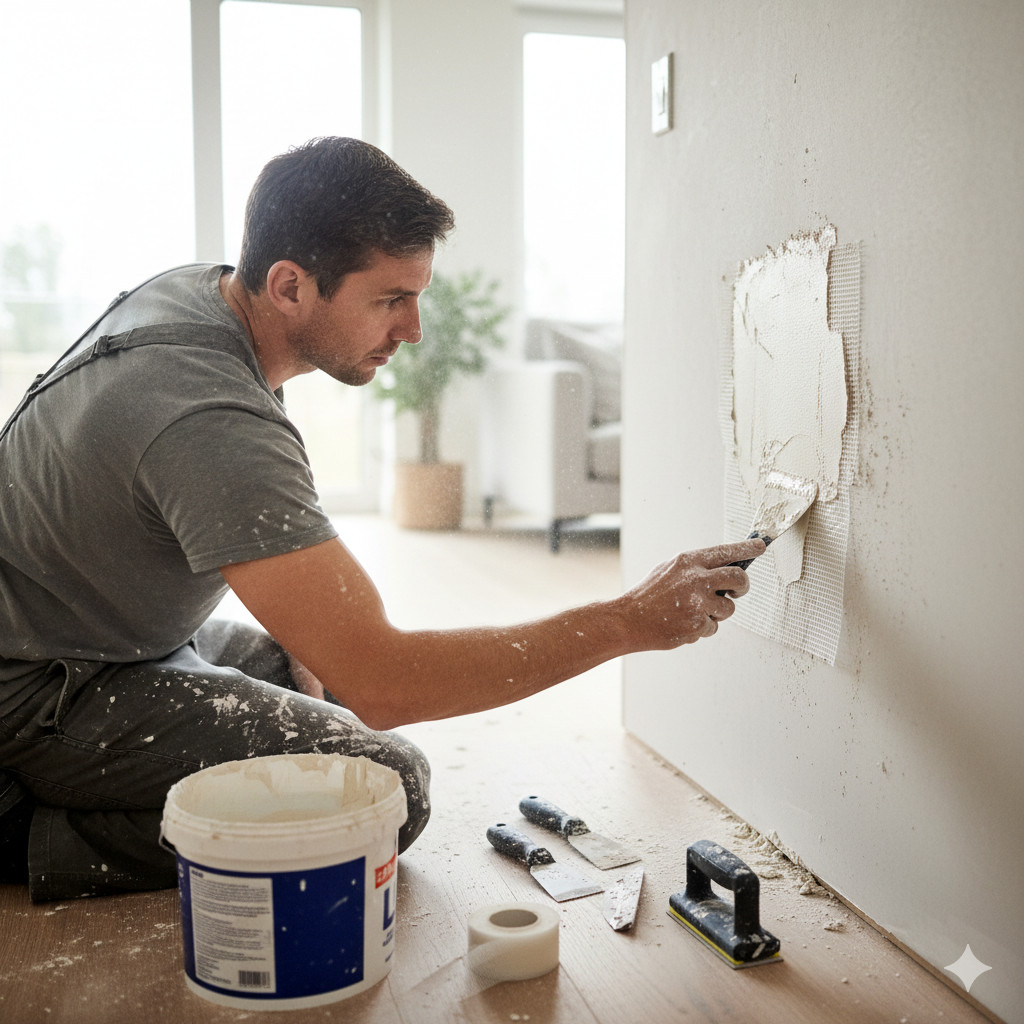
How to Repair Medium Size Holes
For holes bigger than nail holes:
- Use a self, adhesive mesh patch
- Put joint compound over it
- Spread the edges smoothly outwardLet it dry
- Smooth with sandpaper
- Put on a second layer if necessary
- Prime and paint
Repairing Large Holes
If a large area of the drywall is damaged then it is necessary to replace the damage with a structural patch.
- Remove the damaged drywall in a square shape.
- Put wooden support strips on the inside of the wall.
- Attach a fresh piece of drywall to the support.
- Use tape for the joints.
- Put on several joint compound layers.
- Sand the surface between each coat.
- Prime and paint
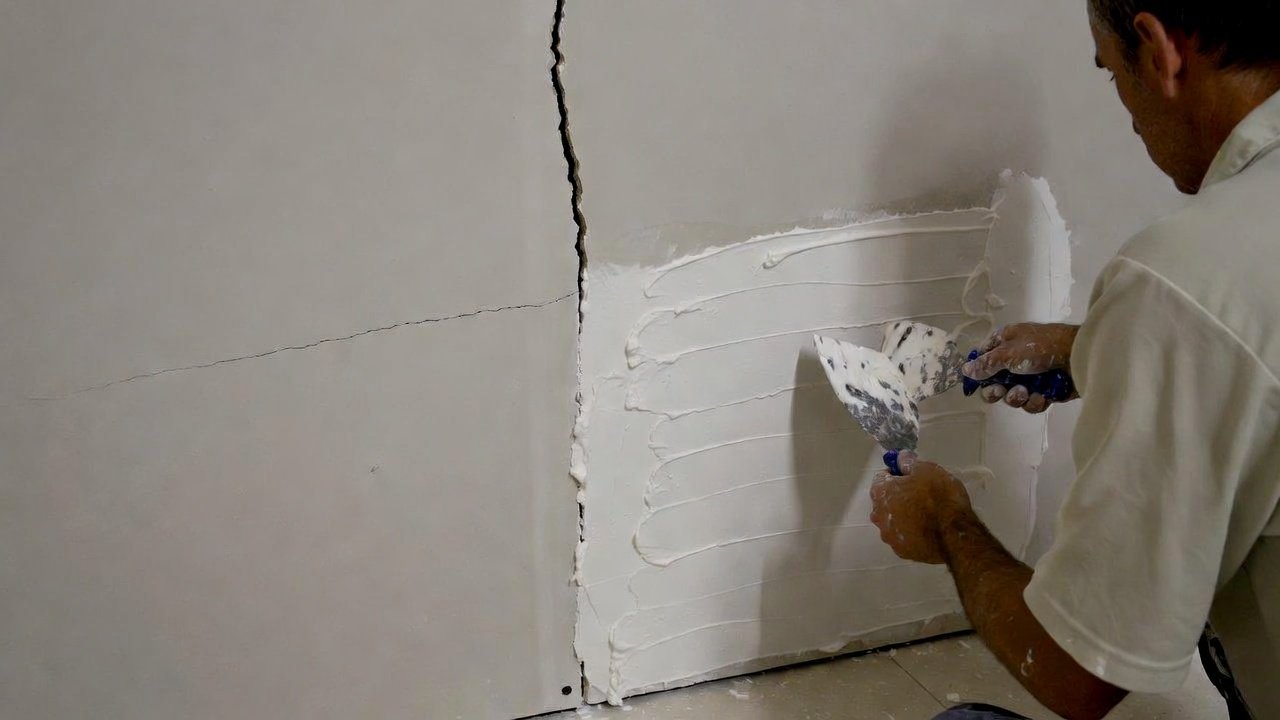
Tackling Cracks in Drywall
When cracks are not properly fixed, they tend to reappear.
- First, widen the crack a bit to get rid of any loose material
- Next, put mesh tape over the crack
- Then, spread joint compound over the tape
- After it dries, sand the surface
- If the finish is not smooth enough, repeat the steps
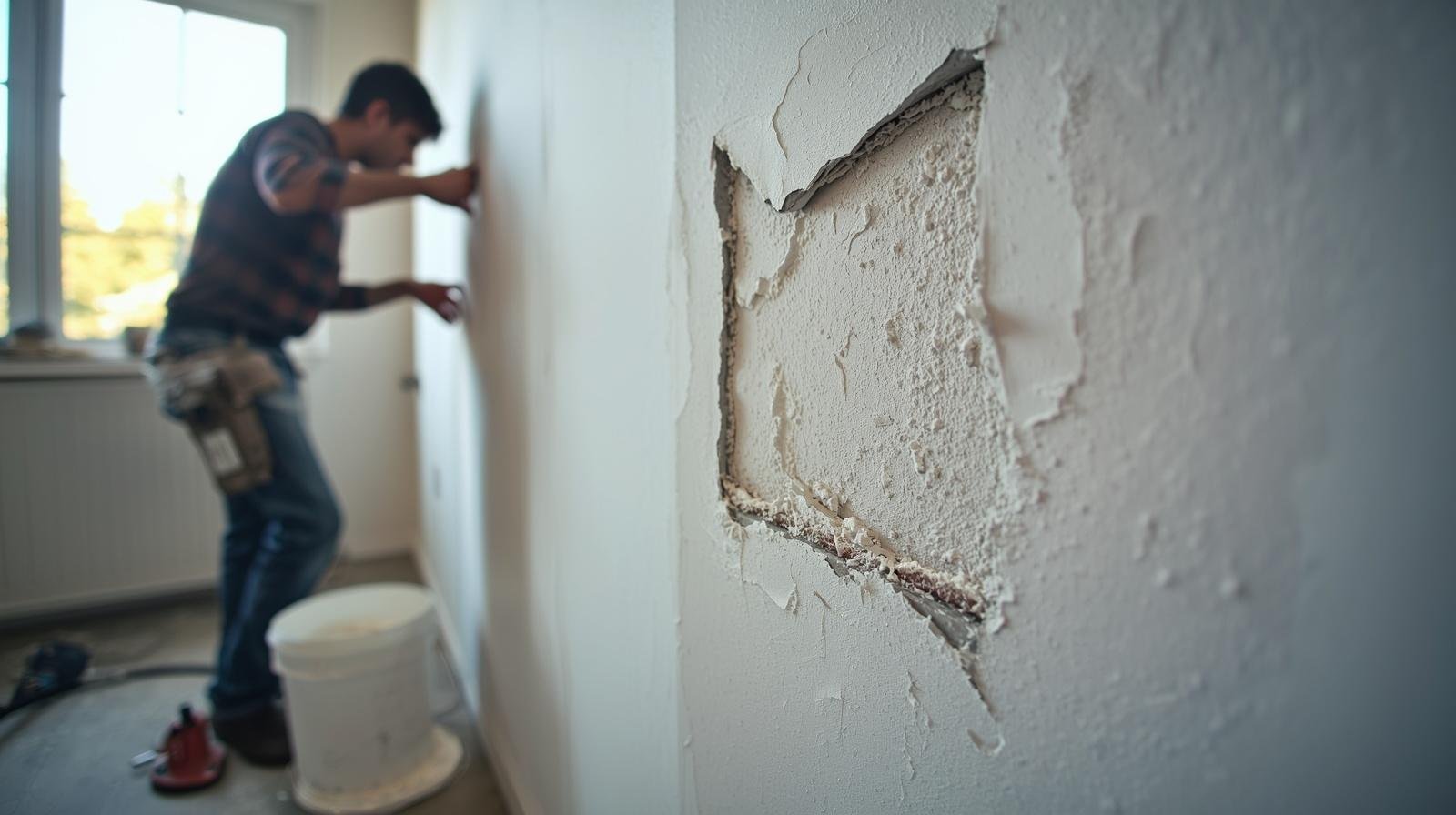
Dealing With Water-Damaged Drywall
Water damage is something you should take care of in a delicate manner.
- Start by fixing the source of moisture.
- Take out any drywall that is soft or crumbling.
- Be alert for the presence of mold.
- If it is necessary, install new drywall.
- Before painting, cover the stains with a sealer.
When to Call a Professional
DIY repairs may be effective for minor damage, but professional drywall services are certainly advisable when:
- Damage is extensive
- Mold is presentCeilings are affected
- Structural issues exist
- You want a perfect finish
Experts own the right tools and have the skills to perfectly match textures, and therefore their work, as well as the results, will last.
Conclusion
You shouldn’t be afraid of fixing drywall. If you do it right, it is even possible to make the drywall with the large hole look like new. No matter if you are getting ready to sell your home, fixing a damage that happened by accident or you just want a new look, a drywall repair is always a good idea to raise the value as well as the appearance.
Should it be too much for you to handle, a professional at least will be able to do it quicker and will also guarantee a perfectly finished job.